Bangkok Art and Culture Centre

International project “Russian seasons”
in the Kingdom of Thailand

Exhibition of scarves-paintings “Silk Map of Russia”
by designer Nina Ruchkina

Tai

Rus

Eng

About the exhibition

The scarf is a national symbol of the Russian Federation, combining aesthetics and spiritual life, the wisdom of the ages and high craftsmanship. The silk fabrics of the scarves — paintings at the “Silk Map of Russia” exhibition embody vivid images of Russian regions — they represent artistic crafts and trades, masterpieces of art, sacred relics and ornaments, and depictions of nature. The visitors will be able to see the famous “Gzhel”, the magnificent “Ivolginsky Datsan”, the exquisite “Bridges of Arts”, the legendary “St. Basil’s Cathedral”, and other scarves — paintings that will vividly tell the story of Russia, its history, peoples, and customs. In the Kingdom of Thailand, the exhibition is dedicated to the dialogue between the cultures of the two countries in the context of common traditional values that bind them together: respect for heritage, the value of family and intergenerational ties, reverence for work, hospitality, and a special perception of beauty and harmony.

The author of the exhibition is designer Nina Ruchkina, the creator of the accessory brand “Trendy Russians”

The author of the descriptions is Anastasia Astrakhantseva

The exhibition “Silk Map of Russia” in the Kingdom of Thailand is part of the international project “Russian seasons” by the Government of the Russian Federation and the Ministry of Culture of the Russian Federation. The presented exposition is part of the large-scale exhibition project “Trendy Russians”, which was implemented with the support of the Presidential Foundation for Cultural Initiatives (RF).

About the designer

Nina Ruchkina is a Russian designer, a popularizer of national culture, the founder of a fashion house (2006) and the accessory brand “Trendy Russians” (2016), and a member of the Moscow Association of Artists of the International Art Fund. The designer’s creative style is defined by her adherence to the best artistic traditions and, at the same time, her boldness in creative concepts.

The “Trendy Russians” brand is the recipient of awards and accolades, including a victory in the prestigious Russian National Award ‘See What We Are Made of’ in the ‘Cultural Code’ category from the Ministry of Culture of the Russian Federation (2025).

Accessories from Nina Ruchkina’s fashion house have been presented at numerous Russian and international exhibitions, are permanently on display in Russia’s largest museums (the Moscow Kremlin Museums, the Russian Museum, and others), and are part of the collections of the country’s top officials — the President of the Russian Federation, and the Minister of Culture of the Russian Federation.


Nina Ruchkina: “We strive for the ‘Trendy Russians’ scarves to adorn and delight women all over the world, to remain in people’s memories as a reflection of Russia’s great heritage, and to become valuable and meaningful gifts. Each design we create is a tribute to the traditions and customs of peoples, an appeal to lofty ideals and spiritual meanings.”

1

The federal city of Moscow

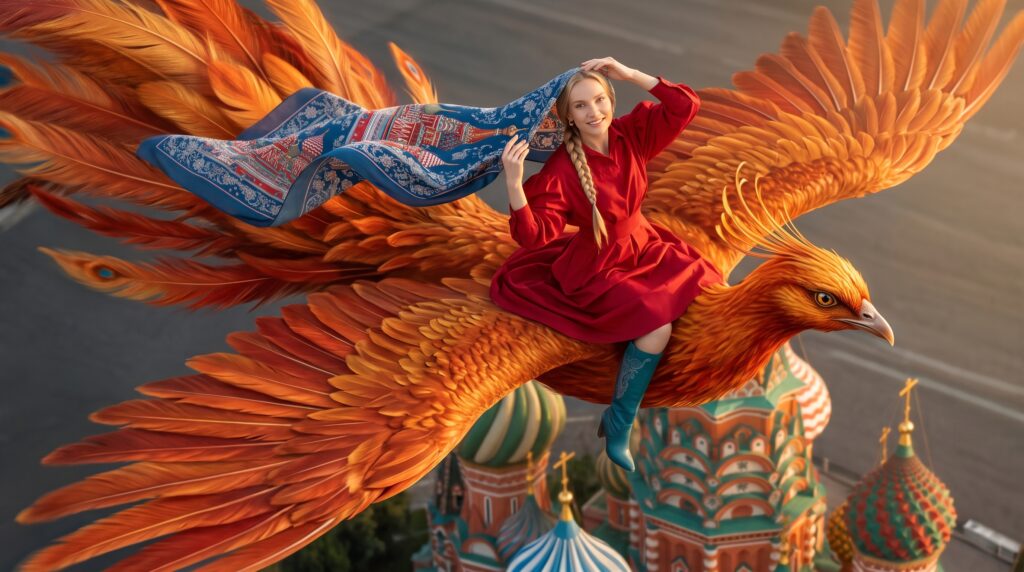
St. Basil’s Cathedral

One of the most beautiful and geometrically complex structures in world architecture, the symbol of Moscow and Russia, was erected in 1555-1561 at the behest of Tsar Ivan the Terrible. The temple ensemble belongs among the UNESCO World Heritage Sites and unites ten churches and a bell tower standing on a common foundation.

St. Basil’s Cathedral. Scarf. Printing on silk, 90×90 cm

Designer: Nina Ruchkina, artist: Natalia Alexandrova

2021

2

Moscow region

Gzhel

The scarf is made based on the world famous technique of Russian painting originally from the Moscow region. The dominant place on the scarf is occupied by cobalt roses placed on a light background — one of the most common drawings of the Gzhel technique, which shape has been perfected by craftsmen since the XIV century for hundreds of years. Of particular importance are the images of blue birds of paradise, which certainly bring good luck and happiness.

Gzhel. Scarf. Printing on silk, 90×90 cm

Designer: Nina Ruchkina, artists: Anna Shulik, Lola Zakirova, Diana Zakirova

2024

3

The federal city of Saint Petersburg

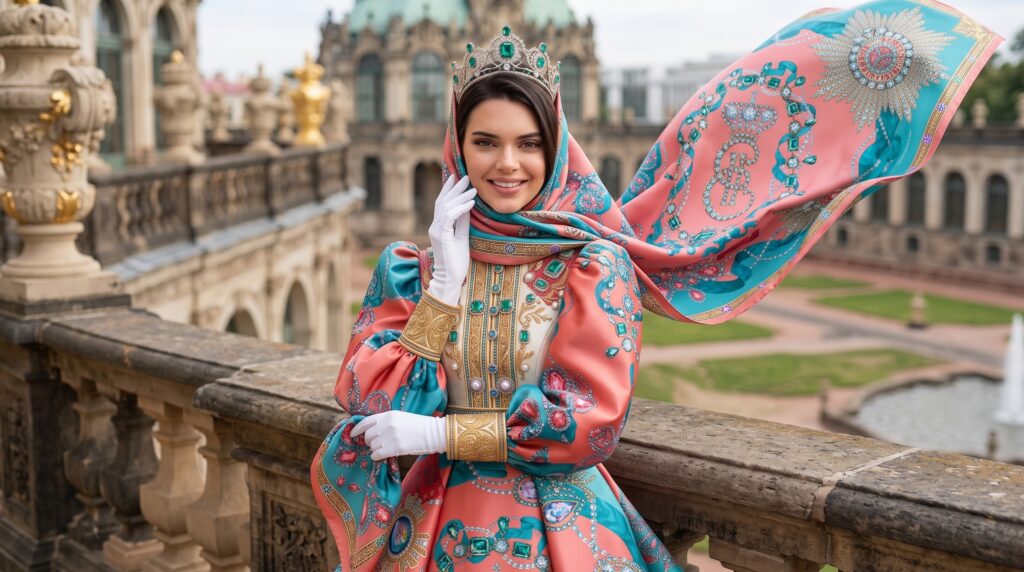
The Jewels of Catherine the Great

Catherine II the Great, whose reign is called the “Golden Age”, possessed an extensive collection of jewelry that became the pride of the treasury of the Imperial House of Romanov and the Russian State. Many of them have survived to the present day and are now in the Diamond Fund of Russia. The scarf depicts: the Monogram of Catherine II, the parure “Bow-esclavage”, the girandole earrings, the emerald necklace of Catherine, the Order of St. Catherine I and II degrees.

The Jewels of Catherine the Great. Scarf. Printing on silk, 90×90 cm

Designer: Nina Ruchkina, artist: Mikhail Ivanov

2020

4

Leningrad region

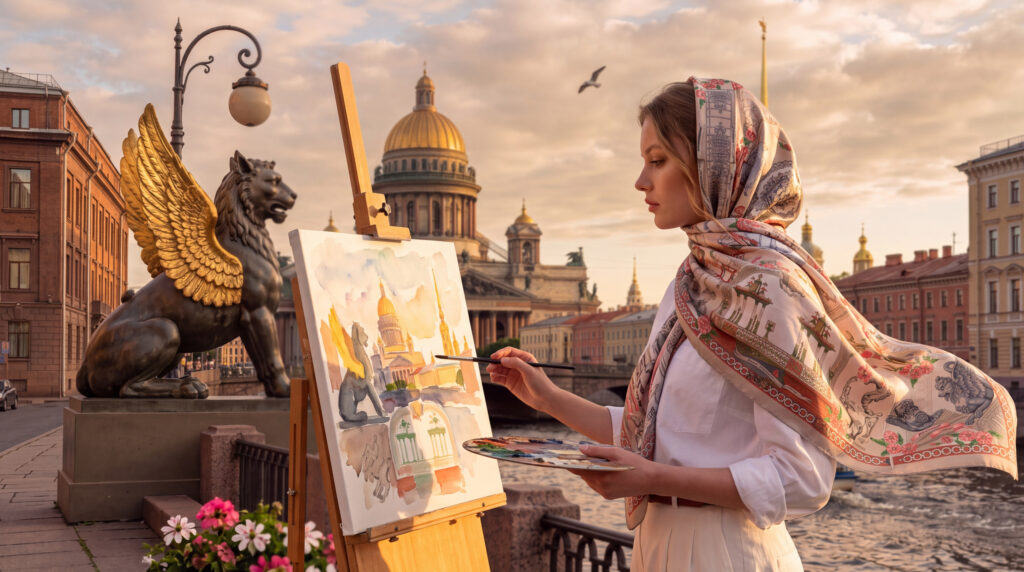
Bridges of Arts

Exquisite bridges and parks of the Leningrad region are masterpieces of world art — the Dragon Bridge, the Great and Small Chinese Bridges, the Cross Bridge from the Alexander Park of Tsarskoye Selo, the works of Catherine Park and the famous dominants of the town of Pavlovsk, as well as vases from the Cast-iron Bridge at the Temple of Friendship, lion masks of the Three-Arched (Lion) Bridge of Gatchina Palace Park, which belongs to the best examples of palace and park architecture.

Bridges of Arts. Scarf. Printing on silk, 90×90 cm

Designer: Nina Ruchkina, artist: Anna Pogulyaeva

2026

5

Vologda region

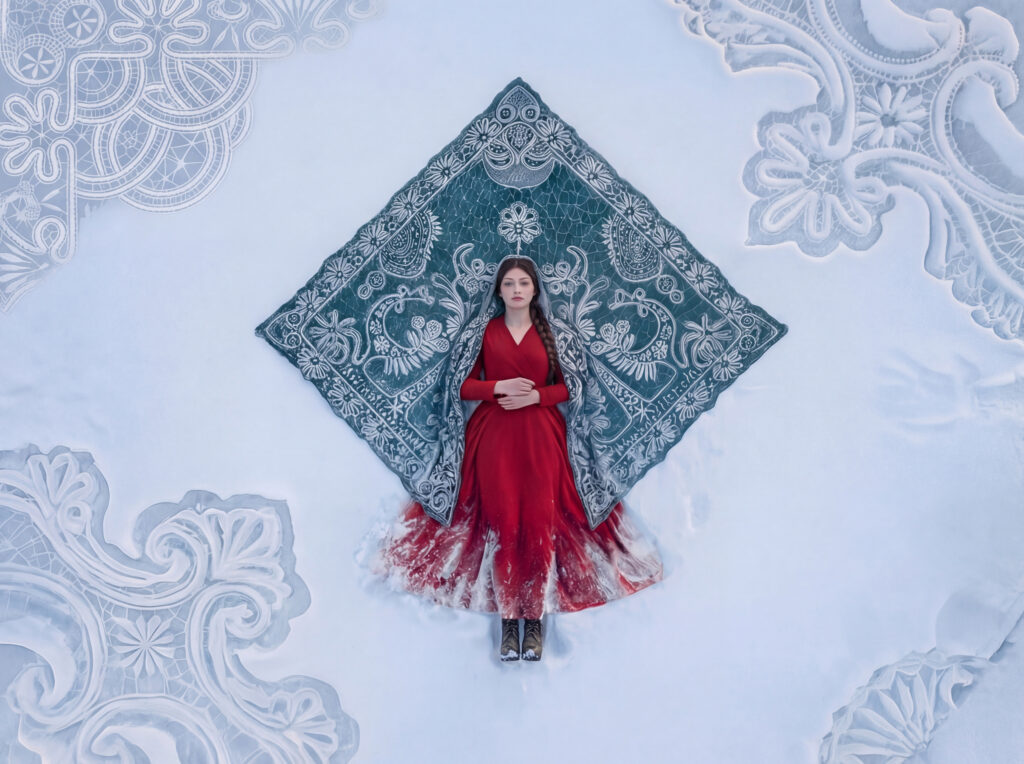
Vologda Lace

Vologda lace is included in the world treasury of lace making, it is one of the most famous symbols of Russia. Expressive patterns of five-leaf and seven-leaf flowers, knitted with white filigree, the division of lace into a pattern and a background, purity and virtuosity of lines, exquisite realization – this is the artistic originality of Vologda lace. The composition of the scarf is formed by a stylized image of the tree of life and outlines of magical birds, representing prosperity.

Vologda Lace. Scarf. Printing on silk, 90×90 cm

Designer: Nina Ruchkina, artist: Natalia Alexandrova

2021

6

Komi Republic

The Master of the Taiga

The scarf is dedicated to the heritage of the Komi Republic, combining the ornamental and mythopoeic Finno-Ugric tradition in a single artistic space. The central motif is the image of a bear, one of the key characters in the indigenous myths and legends of the Komi peoples, revered as the master of the forest, the embodiment of fertility, ancestral memory, and the sacred connection of man with nature.

The Master of the Taiga. Scarf. Printing on silk, 90×90 cm

Designer: Nina Ruchkina, artist: Maria Muravskaya

2026

7

Kaliningrad region

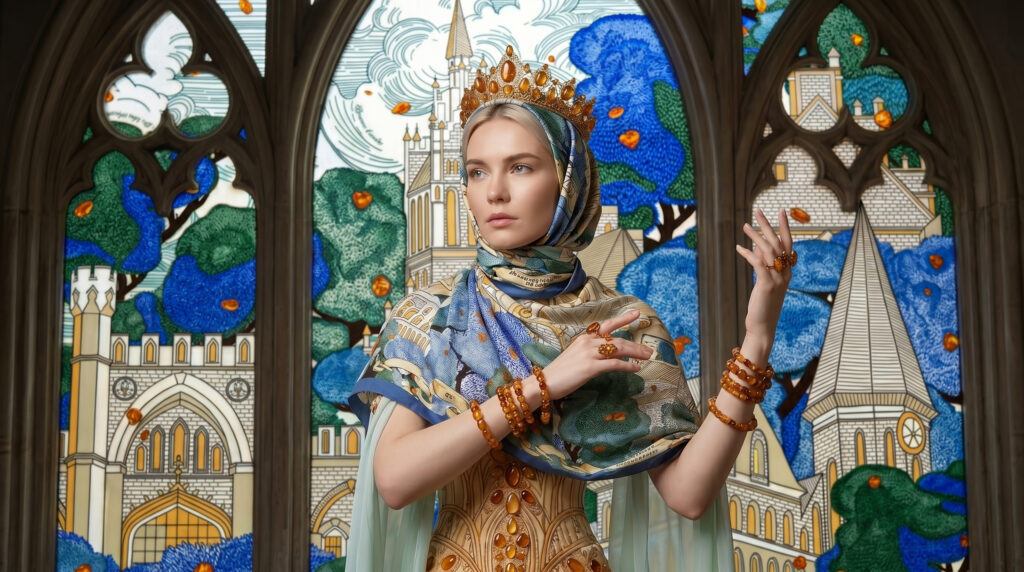
Amber Coast

The composition is an artistic generalization of the historical image of Kaliningrad (formerly Konigsberg) and its surroundings. In the foreground stands the silhouette of the Cathedral on the Kant island, history of which dates back to the XIV century. Next, urban ensembles built in the XIX-early XX centuries unfold. The decorative motif of the scarf is represented by a scattering of amber, whose largest deposit is located in the Kaliningrad region, known as the “Amber Region of Russia”.

Amber Coast. Scarf. Printing on silk, 90×90 cm

Designer: Nina Ruchkina, artist: Ksenia Kovrazhkina

2026

8

Belgorod region

Stary Oskol Toy

The Stary Oskol clay toy is a special phenomenon of Russian folk art, which has absorbed the artistic skill and richness of traditions of the Belgorod region. The scarf embodies a panorama of beautiful statuettes made in the hereditary canons of Stary Oskol modeling. The central composition represents the Belgorod round dance “Peresek”.

Stary Oskol Toy. Scarf. Printing on silk, 90×90 cm

Designer: Nina Ruchkina, artist: Anna Pogulyaeva

2025

9

Tula region

Tula Evenings

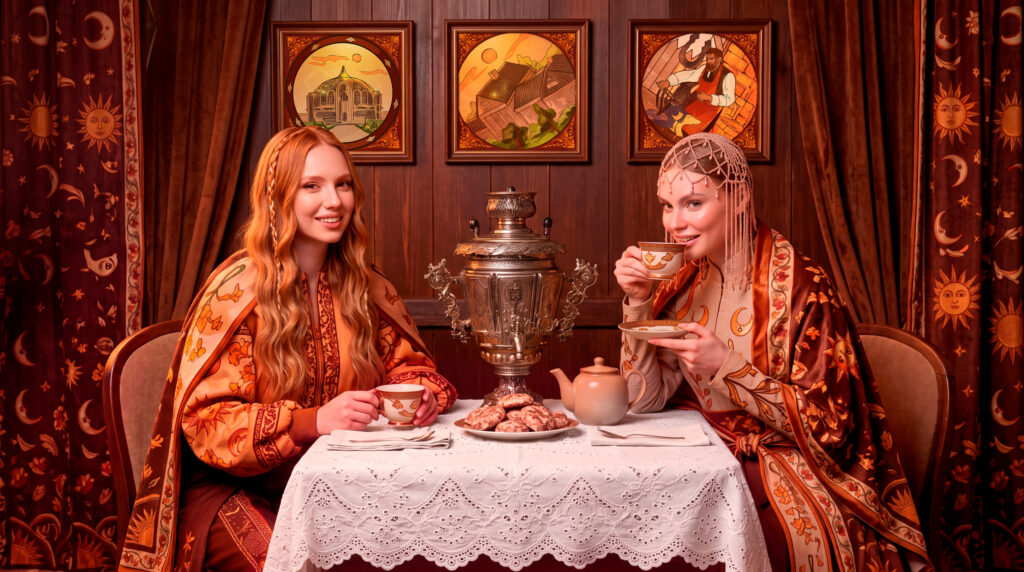
In the center of the composition there is a tea party scene with famous Tula gingerbread and samovar. The corner medallions contain historical and cultural objects of Tula: views of the museum-estate of Leo Tolstoy and the bright Tula fair, the image of the hero of Nikolai Leskov’s story, the Tula craftsman Lefty. The Tula State Museum of Arms, one of the oldest and largest weapons museums in Russia, is located in the fourth register.

Tula Evenings. Scarf. Printing on silk, 90×90 cm

Designer: Nina Ruchkina, artist: Sofia Golovina

2026

10

Republic of Kalmykia

The Seven‑Day Pagoda

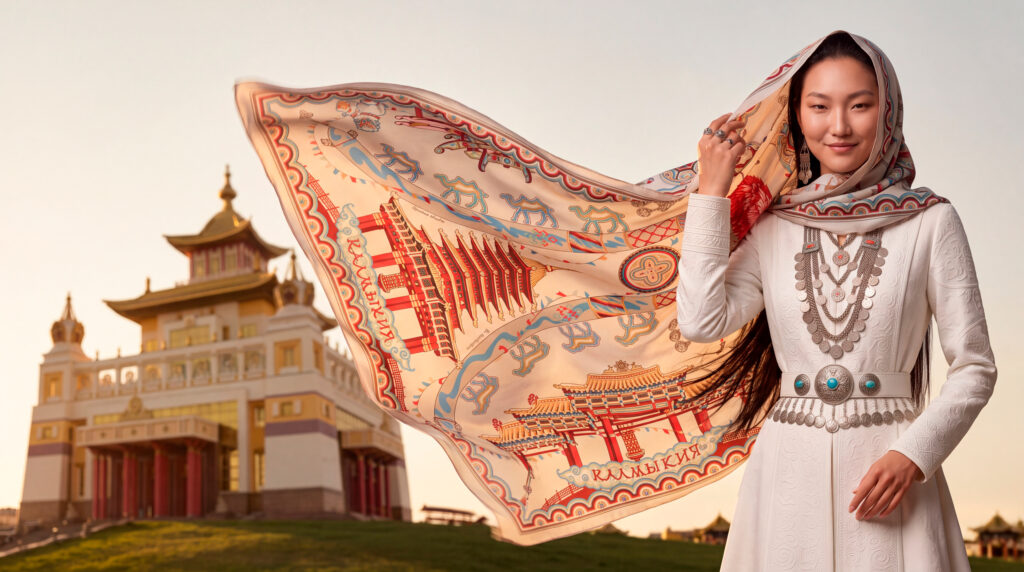
The Seven-Day Pagoda is a unique Buddhist building in Russia, one of the most recognizable and revered sights of Elista, the capital of the Republic of Kalmykia. In the center of the scarf we see the Pagoda, which got its name due to the stepped structure: it consists of seven tiers, each of which is dedicated to a specific day of the week. The side registers contain the images of the central gate to the temple «Golden Abode of Buddha Shakyamuni» and the symbolic gate of the Buddhist complex «Lonely Poplar».

The Seven‑Day Pagoda. Scarf. Printing on silk, 90×90 cm

Designer: Nina Ruchkina, artist: Natalia Alexandrova

2026

11

Karachay‑Cherkess Republic

Heavenly Mirror

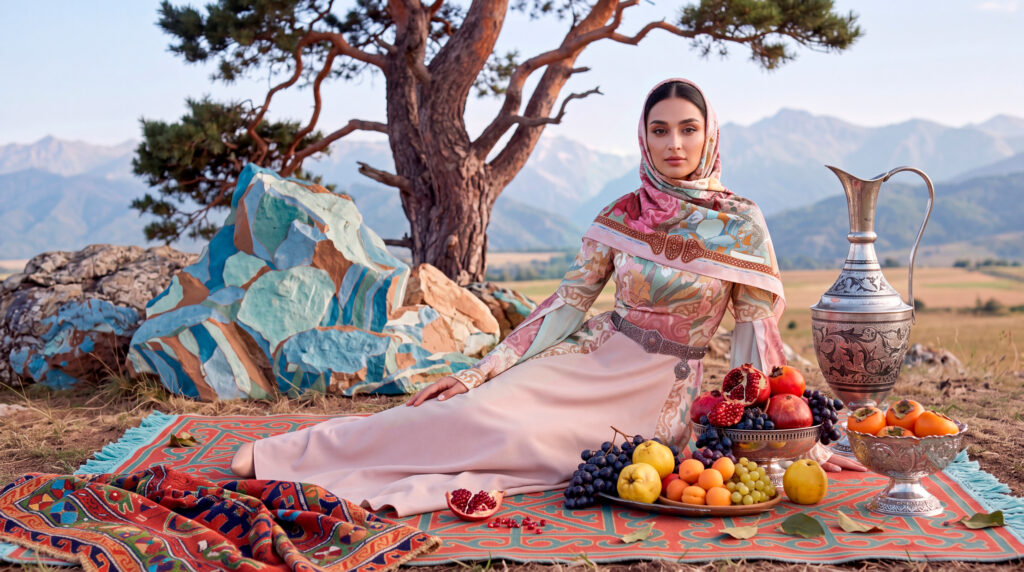
The Karachay-Cherkess Republic is the pearl of the North Caucasus, famous for its rich culture and history, and amazing natural monuments. As if in a magic mirror of the beautiful Shatana, the main heroine of the Nart saga, the landscape panoramas of the Teberdinsky nature reserve and symbolic objects were embodied on the scarf. According to the legend, Shatana was endowed with wisdom and foresight, and her heavenly mirrors reflected the past, present and future.

Heavenly Mirror. Scarf. Printing on silk, 90×90 cm

Designer: Nina Ruchkina, artist: Natalya Bilichenko

2026

12

Sverdlovsk region

Stone Flower

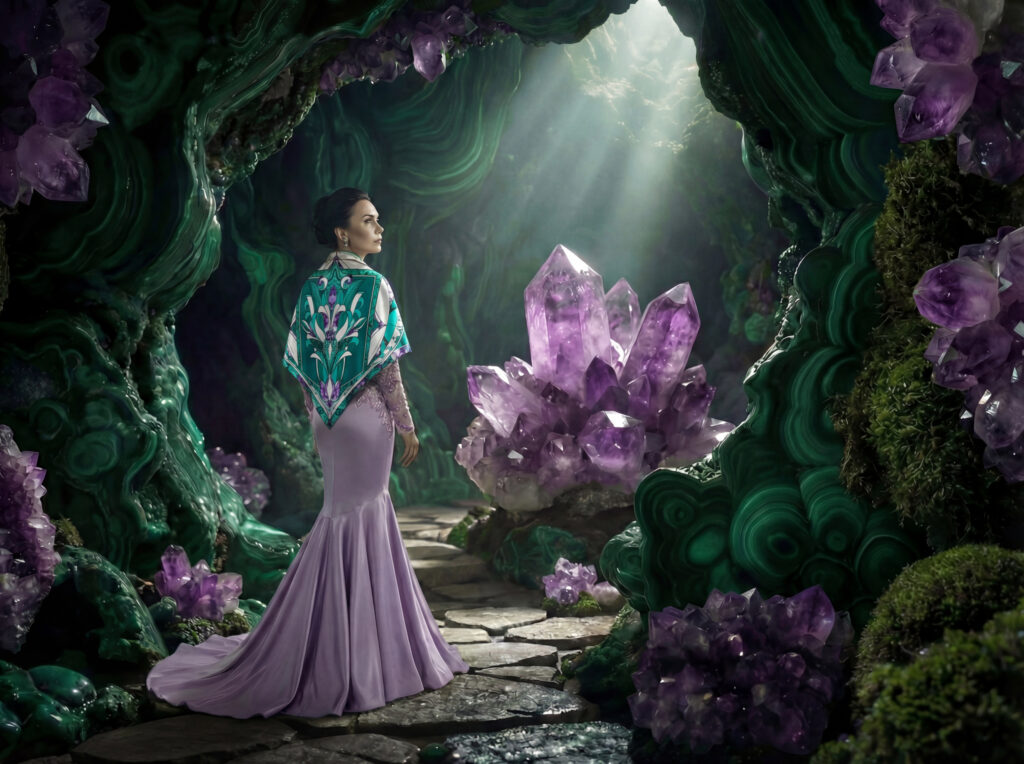
The scarf reveals the treasury of the gardens of the Ural Mistress of the Copper Mountain, which since ancient times embodies an inexhaustible source of inspiration. The title image of the scarf is inspired by the tale of the Stone Flower, a symbol of creative search and perfection from the story book «The Malachite Box» by the Ural genius writer P. P. Bazhov (1879-1950), who created a timeless epos about the Urals based on folklore.

Stone Flower. Scarf. Printing on silk, 90×90 cm

Designer: Nina Ruchkina, artist: Kristina Dubinina

2016

13

Yamalo‑Nenets autonomous district

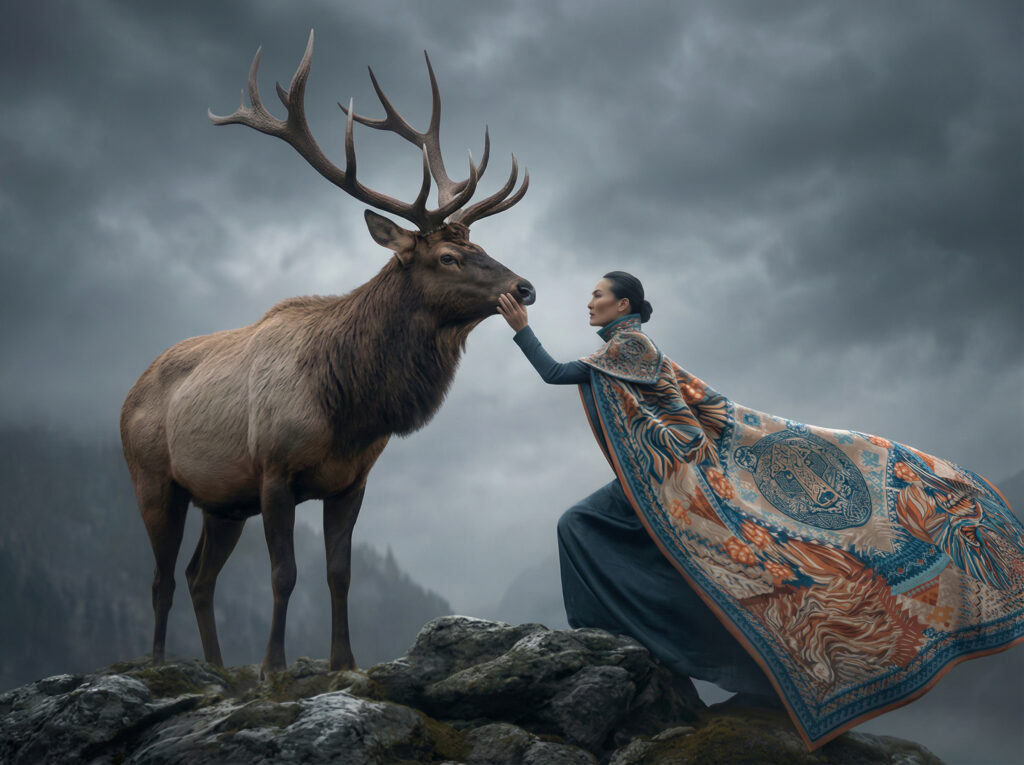
Northern Lights

The design is inspired by the natural beauty of Yamal, in the North of the Urals. It is there, in Yamal, which name translates from Nenets as «the edge of the earth», that the sky blazes up with the Northern Lights in autumn and winter. The scarf opens with central images of deer, woven as if from crystal-clear ice, and the pattern is framed by traditional ornaments of indigenous peoples of that area.

Northern Lights. Scarf. Printing on silk, 90×90 cm

Designer: Nina Ruchkina, artist: Anna Tumasheva

2019

14

Kirov region

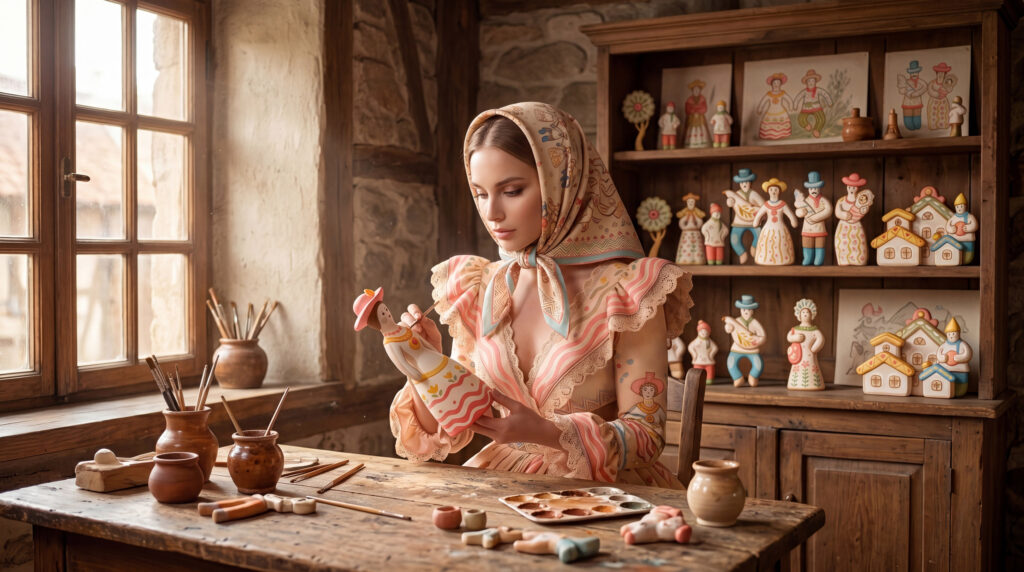
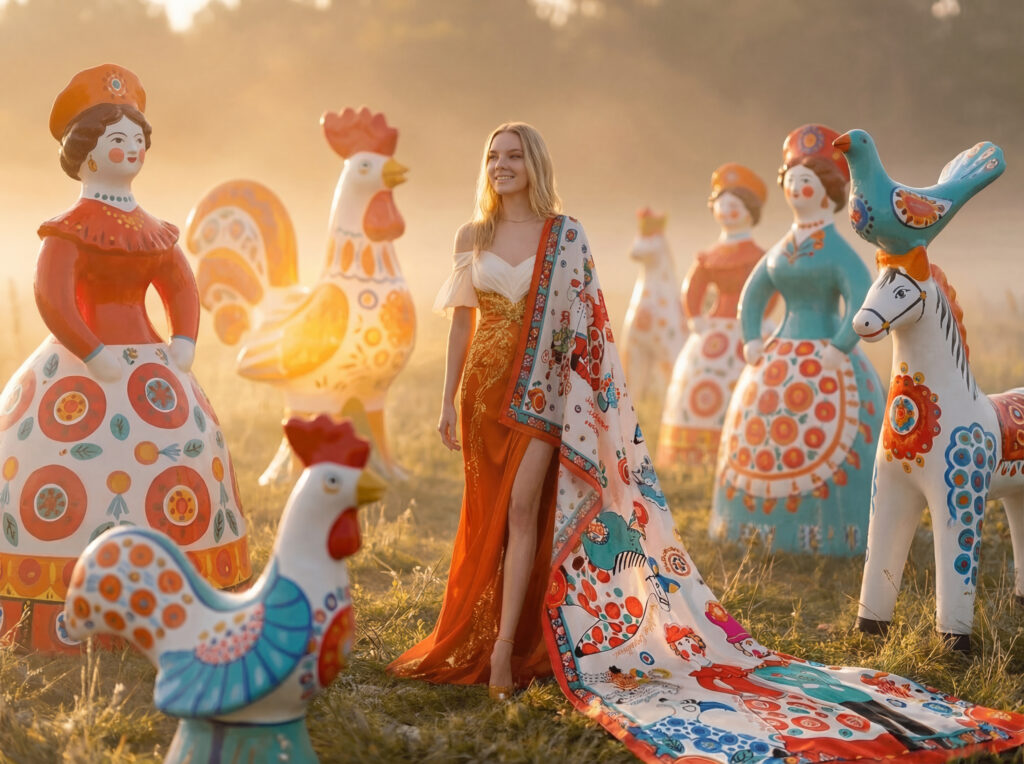
Dymkovo Toy

Dymkovo toy is one of the oldest crafts in Russia, which originated in the Kirov region more than 400 years ago. Smart and cheerful, Dymkovo toy appreciates company, joy and enthusiasm. It is distinguished by rich, deep colors, undestroyed sincerity and warmth of folk art — the history of Russia has never been so expressive and eloquent.

Dymkovo Toy. Scarf. Printing on silk, 90×90 cm

Designer: Nina Ruchkina, artist: Serafima Atayants

2026

15

Republic of Altai

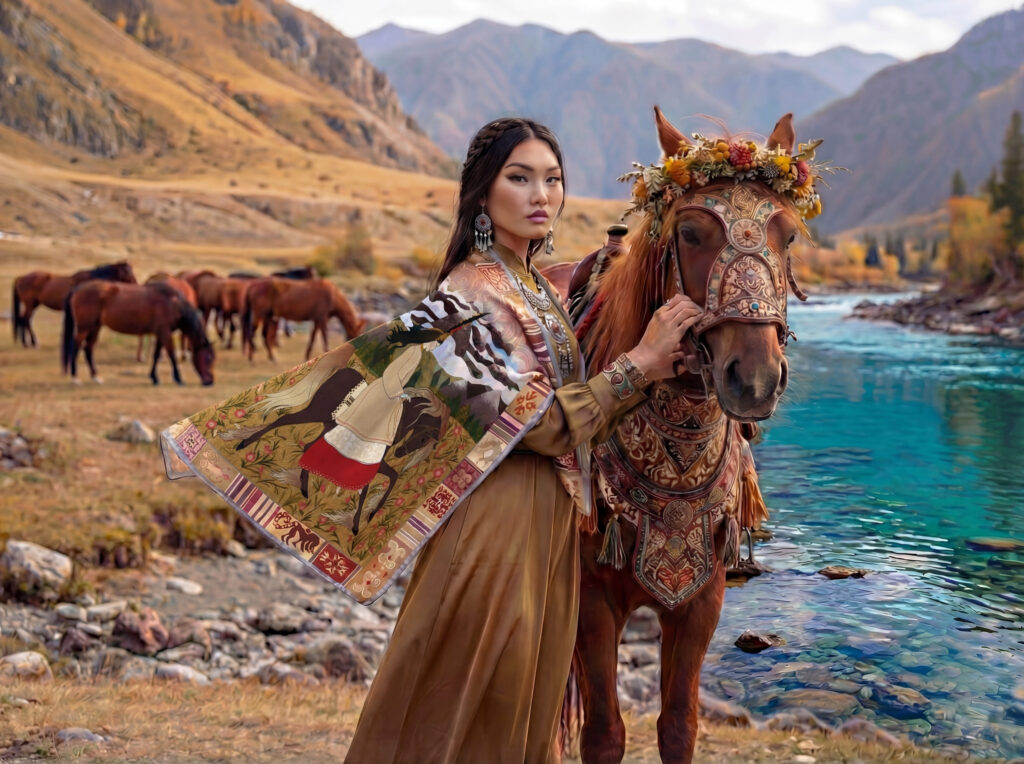
The Female Face of Altai

The canvas depicts a metaphorical embodiment of female power associated with Altaic mythology, according to which every woman is the daughter of the Great Mother Umai Ene and, like her, is endowed with the ability to transform the world. Umai Ene’s daughter is depicted riding a horse against the background of a mountain landscape, and the ornamental frame of the scarf consists of 20 types of drawings — a «protective field» inspired by the spiritual tradition of Altai.

The Female Face of Altai. Scarf. Printing on silk, 90×90 cm

Designer: Nina Ruchkina, artist: Ksenia Kovrazhkina

2025

16

Republic of Buryatia

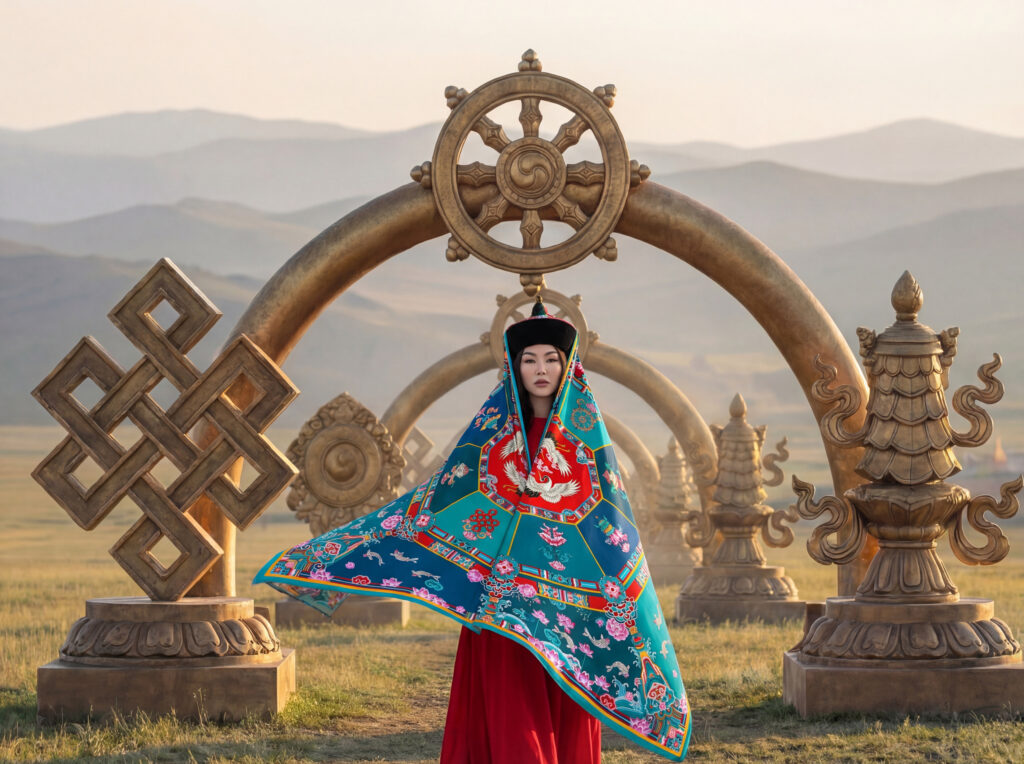
Ivolginsky Datsan

Ivolginsky datsan «Khambyn Khure» («The Monastery of the Wheel of Learning, bringing happiness and full of joy») is the largest Buddhist monastery in Russia, located in Buryatia, in the village of Verkhnyaya Ivolga; it was built in 1945. The scarf opens a bird’s-eye view of the monastery: a colorful roof decorated with images of eight virtuous symbols of Buddhism. A lot of fish in the blue waters mean happiness.

Ivolginsky Datsan. Scarf. Printing on silk, 90×90 cm

Designer: Nina Ruchkina, artist: Natalia Alexandrova

2023

17

Jewish autonomous region

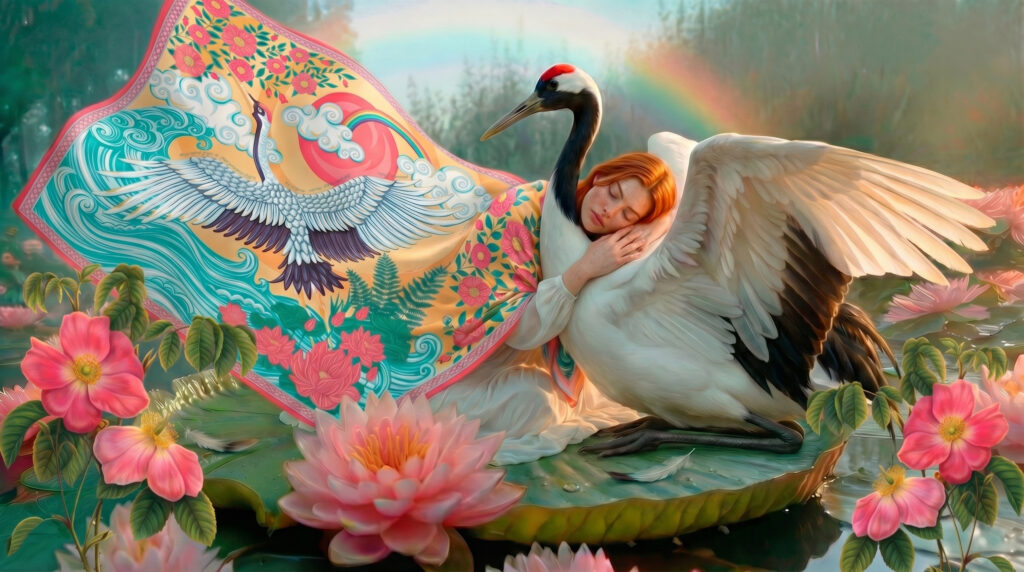
Birobidzhan

The city of Birobidzhan is located between the Bira and Bijan rivers among the picturesque landscapes of the Jewish autonomous region. The canvas captures the reserved splendor of the nature of the capital of the autonomy, embodying the spiritual values of the people of the region, fortitude and victoriousness. The drawing is topped with a sun and a rainbow placed on the flag of the JAR, which is a biblical symbol of peace and goodness.

Birobidzhan. Scarf. Printing on silk, 90×90 cm

Designer: Nina Ruchkina, artist: Valeria Razumova

2025

18

Primorski Krai

Legends of the Amur Peoples

The Far Eastern ornaments had a deep sacred meaning associated with the structure of the world and the place of man in it. The pattern of the scarf is inspired by intricate compositions of Nanai wedding robes «sike» and «amiri». Large semicircles form a «fish scale» that protects the girl from evil spirits, and spirals combine into images of the world tree, animals, birds, snakes, creating a protective field.

Legends of the Amur Peoples. Scarf. Printing on silk, 90×90 cm

Designer: Nina Ruchkina, artist: Anna Shulik

2021

Project media partners:

General
media partner

General international media partner

Official
social network